Apple Army: A Color Font That Commands Attention
Creative projects thrive on impact. Whether you're designing a logo, crafting social media graphics, or producing packaging, the typography you choose sets the tone. A premium font like Apple Army offers more than just letters; it provides a distinct personality. This creative font, with its structured form and inherent color capability, is designed to make a statement. It moves beyond standard monochrome typefaces, integrating visual texture directly into the characters. For designers and creators seeking a modern typography tool that blends utility with strong visual appeal, understanding this font's characteristics is the first step.
Understanding the Visual Character of Apple Army
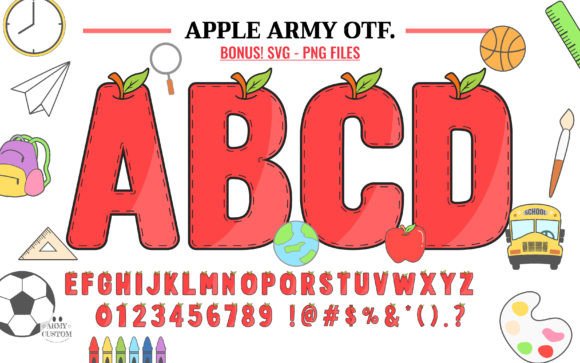
Apple Army is best described as a display font with a bold, structured presence. Its letterforms draw inspiration from classic, sturdy serif fonts but are reinterpreted with a contemporary edge. The defining feature is its color font technology. In its full-color version, each letter is composed of layered shapes—often resembling apples or stylized fruit segments—creating a vibrant, textured look. The black version maintains the strong silhouette but offers a clean, solid alternative for more restrained applications or for use with Cricut and other cutting machines.
The font's personality is one of confident charm. It feels approachable yet professional, making it versatile for a range of contexts. It avoids the fleeting trends of overly ornate script fonts or overly casual handwritten fonts, instead offering a balanced, memorable aesthetic. The visual hierarchy it establishes is immediate. When used for a headline or logo, it naturally dominates the layout, guiding the viewer's eye and anchoring the entire design.
Practical Applications Across Creative and Professional Projects
The utility of a font like Apple Army spans numerous disciplines. Its value is realized when applied to projects where visual engagement is paramount.
- Branding and Logo Design: For startups, food brands, artisanal products, or children's education services, Apple Army can form the core of a brand identity. Its unique texture ensures high recognition. Pair it with a simple sans serif font for body copy to maintain readability while letting the logo shine.
- Marketing and Social Media: In the fast-scrolling environment of social media, a post needs to stop the thumb. Using this font for key phrases in social media graphics or blog banners creates an instant focal point. Its color version can align with campaign palettes, adding cohesion to digital advertising.
- Editorial and Publishing: Magazine covers, book chapter titles, and poster designs benefit from a strong display font. Apple Army adds a layer of visual interest to editorial design, making headlines pop without relying on excessive graphic elements.
- Packaging Design: Product packaging on shelves competes for attention. A textured, colorful font can convey quality and creativity, influencing a customer's perception of the product inside. It works particularly well for gourmet foods, crafts, or boutique cosmetics.
- Personal and Craft Projects: Beyond commercial use, the font is a powerful design asset for hobbyists. Create standout party invitations, custom wall art, or personalized stationery. The black version's compatibility with cutting machines like Cricut Design Space makes it accessible for physical craft projects.
Evaluating project fit is crucial. The font's detailed, textured nature means it is optimized for larger sizes—think headlines, titles, and logos. It is not intended for long paragraphs of body text, where its intricate details could reduce readability. Always consider the medium. For digital screens, ensure the color version renders clearly. For print, check how the layered colors separate in your chosen software.
Integrating Apple Army Into Your Design Workflow
Adopting a new creative font into your toolkit requires thoughtful integration. Here’s how to approach it effectively.
Font Pairing is Key. A striking display font needs a complementary partner. Apple Army pairs exceptionally well with clean, neutral typefaces. A geometric sans serif font like Montserrat or a simple serif font like Lora can provide a readable foundation for body text, allowing the display font to handle the visual heavy lifting. Avoid pairing it with other highly decorative or textured fonts, which can create visual chaos.
Test Across Contexts. Before finalizing a design, test the font in its intended environment. Mock up a social media post, a website header, or a physical product label. Check for legibility at the required size and ensure the color palette works with your overall scheme. The font's included styles—typically the full-color version and a solid black version—give you flexibility. Use the color version for high-impact moments and the black version for scenarios requiring simpler reproduction or compatibility with specific software like Silhouette or Inkscape.
Understand the Licensing. For any commercial font, review the license agreement. Most premium fonts, including Apple Army, come with a license that permits use in both personal and commercial projects, such as client work, merchandise, and digital products. However, the license usually prohibits redistributing the font files themselves. Clarity here ensures you use the font ethically and legally in your brand identity and products.
Leverage the Color Capability. The color version is where the font truly distinguishes itself. In compatible programs like Adobe PhotoShop or Illustrator, you can often adjust the colors within the font layers to match specific brand guidelines. This transforms it from a static asset into a dynamic component of your design system.
Ultimately, a font like Apple Army is a specialized tool. It won't replace your workhorse sans serif for body copy, but for moments that require personality and punch, it's invaluable. By understanding its strengths—its bold structure, integrated color, and versatile applications—you can strategically deploy it to elevate your creative projects, enhance your visual hierarchy, and create designs that resonate with your audience. Its practical value lies in its ability to solve a common design challenge: how to be both professional and memorably creative.